 KEYFACT Energy
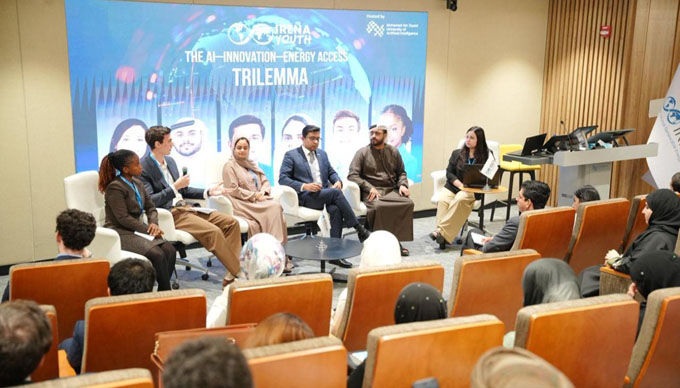
Youth play a central role in driving system-wide transformations, harnessing digital solutions such as artificial intelligence, and helping renewable energy technologies to be accessible and impactful across communities and markets. The Agency has been organising the IRENA Youth Forum, a flagship platform for intergenerational dialogue, capacity building, and youth policy advocacy since 2020, as one of the multiple initiatives to strategically engage and empower young leaders in the energy transition.
Marking its seventh edition and supported by the Government of the United Arab Emirates, the IRENA Youth Forum 2026 ran for three days in Abu Dhabi ahead of the Sixteenth Session of the IRENA Assembly earlier this month under the theme ‘Youth Innovation and Digital Solutions: From AI to Access in Renewable Energy’. The Youth Forum 2026 was officially opened by H.E. Dr. Amna Al Dahak, UAE Minister of Climate Change and Environment and focused on how youth can utilise cutting-edge digital tools to provide energy access solutions and accelerate the global energy transition.
As part of the Youth Forum 2026’s programme, IRENA in collaboration with Mohamed Bin Zayed University of Artificial Intelligence (MBZUAI) organised a session dedicated to the implications of digitalisation and AI on the future of renewable energy jobs.
As countries modernise and expand their power systems, digital solutions should be developed in parallel with physical infrastructure and energy planning, which should include workforce development to meet the evolving needs. According to the latest edition of IRENA’s annual review on renewable jobs, growing automation has already shown its impact on the number of renewable energy jobs in 2024.
At the same time, there will be an emergence of new digital energy jobs and skill sets in roles such as energy data analytics and data science, AI and machine learning, and software development. Many existing roles will also see a transformation of the skill sets required, for example grid operators working with real-time data and predictive models; field technicians using mobile diagnostics, and energy auditors using smart meters and analytic platforms.
In his opening remarks, IRENA Director-General Francesco La Camera reminded participants that people remain central in determining the success of the energy transition:
“We can clearly see how young people are using digital skills, AI, data science, and innovation to change the way energy systems work worldwide. But technology alone is not enough. What truly drives change is people, especially young people, who are willing to take responsibility and work together for a better future.”
As Provost of MBZUAI and representing the university, Prof. Timothy Baldwin said:
“MBZUAI was proud to host the IRENA Youth Forum in Abu Dhabi, bringing young innovators together to turn AI and digital solutions into real-world progress for clean, reliable energy. At MBZUAI, we are committed to research and partnerships that translate innovation into impact - so the energy transition is not only ambitious, but measurable, inclusive, and delivered at scale.”
During the sessions, youth participants and leaders from both the public and private sectors explored trends in AI and digitalisation in the renewable energy sector. They also did a deep dive on the implications of digitalisation on key jobs, and discussed the need for skill development fit for a digital world.
During the Closing Session of the Sixteenth Assembly, two youth representatives addressed IRENA Members on behalf of the 140 young leaders from 62 countries participating in the 2026 Youth Forum. Saida Mammadova from Azerbaijan and Helder Lucheses Gonçalves da Costa from Angola presented three priority recommendations identified during the Forum as a collective youth call to action:
- Ensure AI strengthens inclusive energy systems rather than creating new dependencies.
- Close the real gap in the energy transition by prioritising youth skills, training, and institutional trust.
- Ensure young people are recognised as co-creators in multilateral decision-making on energy transitions.
“In this current uncertain, volatile, and rapidly evolving environment, it is our right to demand action. We trust you to act on these priorities, so please don’t let us down,” both young representatives said in conclusion.
KeyFacts Energy Industry Directory: IRENA