 KEYFACT Energy
Diego Esteve Martins, Energy Intelligence
In a surprising reversal, France's Senate has voted to re-authorize hydrocarbon exploration in its overseas territories, including offshore French Guiana—just eight years after positioning itself as a climate leader by banning new oil and gas licenses in 2017.
Unexpected? Perhaps. But this decision reflects a broader global recalibration of energy policy.
The Global Policy Shift
France isn't alone in reassessing its energy strategy. Canada and the United States have recently softened timelines on emissions targets, while several European nations have delayed internal combustion vehicle bans. Major industrial sectors are also softening its initial emissions reduction commitments.
This isn't abandonment of climate goals—but placing renewed emphasis on energy security. Our global systems remain heavily dependent on fossil fuels, and the transition is proving more complex than anticipated.
Renewable Energy's Growing Challenges
Recent renewable energy projects face significant challenges, which includes:
- Financing hurdles: Banks increasingly require secured Power Purchase Agreements (PPAs) before approving loans
- Infrastructure constraints: Many power grids lack capacity to integrate planned renewable generation
- Operational challenges: Wind and solar projects are encountering unexpected political, financial and technical obstacles
These challenges have created an adjustment period as policies evolve from politically driven timelines to market-driven realities. Yet there are positive signs—renewable energy licensing rounds are recovering, even as hydrocarbon licensing activity ramps up in several regions.
The French Guiana Opportunity
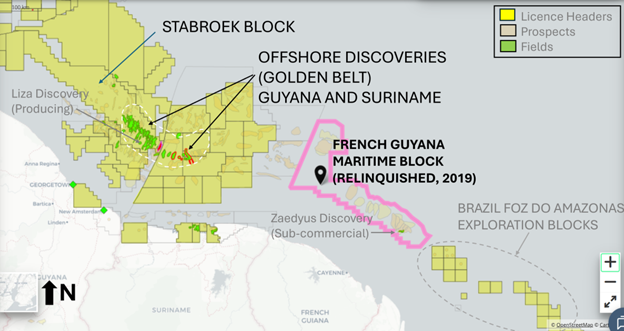
French senators cite compelling economic reasons for their vote, particularly given the transformative discoveries in neighboring Guyana and Suriname.
Regional exploration history provides important context. Early wells—Jaguar-1, Eagle-1, Aracari-1, Aitkanti-1—preceded ExxonMobil's game-changing Liza discovery in Guyana. Initially, the Zaedyus discovery offshore French Guiana generated excitement, but further assessments revealed reservoir complexities that rendered it sub-commercial.
Then the Liza discovery changed everything, triggering multiple major discoveries. The involvement of industry leaders paving the way—Tullow, Shell, Total, and ExxonMobil—in these frontier exploration activities underscores the region's potential.
Historic exploration blocks like Guyana Maritime were among the largest in the region, often compared in scale to Guyana's now-prolific offshore acreage. These frontier areas are back on the strategic radar.
What Happens Next?
The French government remains opposed, citing environmental and reputational concerns. The bill now moves to the lower house, where amendments are possible.
Regardless of the outcome, this vote signals a potential long-term shift in France's energy strategy—and reflects the complex balancing act countries worldwide face between energy security, economic opportunity, and climate commitments.
As policy, energy security, and frontier exploration converge, location intelligence will be critical for understanding these evolving opportunities.