KEYFACT Energy
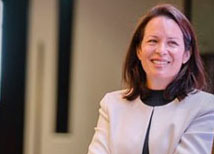
Gayle Meikle Founder & CEO, Frontier Energy Network
A Personal and Strategic Reflection on Identity, Sovereignty and Partnership, Proudly Zimbabwean
As I am sure you won't be surprised to hear, this is a question I have been reflecting on a lot recently and discussing with those that I respect including the sage and knowledgeable African I am lucky enough to call my uncle - Dr. Duncan Clarke: What is an African? It is a question that appears simple, yet in reality it is layered, complex and an especially pertinent topic now for the industry.
I am an African woman. I am Zimbabwean. I was born in Zimbabwe. That is who I am. Yet even that straightforward statement sits within a continent of extraordinary diversity and nuance. Africa is not one single narrative, language, political system or economic model. It is 54 fully recognised sovereign states and incredibly a tapestry of more than 2,000 languages. It also encompasses multiple legal systems, fiscal frameworks, governance structures and cultural identities. It cannot, and must not be reduced to binary terms categorising people as African, or "not African enough" - politically, economically or socially.
Africa’s Civilisational and Cultural Depth
Africa stretches from Arab and Amazigh communities in the north to Swahili-speaking cultures along the East African coast. It encompasses Yoruba and Igbo traditions in West Africa, Shona heritage - my own - alongside Zulu and Xhosa identities in Southern Africa. Berber, Nilotic, Cushitic, Bantu and Khoisan histories reflect centuries of migration, trade and state formation across the continent.
It is Christian, Muslim and traditional belief systems, often coexisting within the same national boundaries. It is Anglophone, Francophone and Arabic-speaking. It is home to some of the youngest populations in the world, yet also to ancient civilisations whose influence shaped global history from Great Zimbabwe to ancient Egypt. This diversity is not fragmentation but structural richness and this richness requires respect.
Sovereignty as the Unifying Principle
Despite this vast diversity, there is a common thread I have consistently observed in my work across the continent: resilience, pride and a deeply held commitment to sovereignty.
In my capacity as Founder & CEO of Frontier, working with Ministries, regulators, NOCs from North Africa through the MSGBC region, across East Africa and into Southern Africa, I have encountered different fiscal regimes, political environments, resource endowments and strategic priorities. The contexts vary significantly from one jurisdiction to another.
Yet across these differences, there is a shared clarity: that Africa’s resources must serve African development first. This principle transcends language and geography. It is not ideological; it is sovereign.
The Strategic Error of Reductionism
When discussions arise around “Africa-first,” the term must not be politicised. It cannot mean black or white, insider or outsider. It must mean respect - respect for national priorities, for local leadership and for the legitimacy of sovereign decision-making and differences in step with international partners.
The upstream sector understands this instinctively. Geology teaches humility. Every basin is different. Every play requires tailored analysis and disciplined strategy. Effective partnership must be structured country by country, ministry by ministry, community by community.
The African Professional and the Global Diaspora
An African today may be a regulator in Abuja, a geoscientist in Luanda, a minister in Cairo, a data analyst in Accra, an entrepreneur in Nairobi or a student in Dakar aspiring to build the next major energy company. An African may be living and working in their home country, or part of the diaspora building a career in London, Houston or Dubai while carrying Africa in their heritage and perspective. There is no single mould. What defines an African is not external perception but internal agency - the ability to shape policy, negotiate fiscal terms, build institutions, create businesses and determine national development priorities.
A Message to Global Partners
For those who are not African by birth but work alongside African governments and institutions, the responsibility is clear. Engagement must be serious, respectful and aligned with national strategies. Investment must recognise sovereign priorities and measured in decades. Africa welcomes investment, but it expects partnership. Sovereignty and collaboration are not in conflict; they are mutually reinforcing. When capital aligns with national development strategies, outcomes are sustainable for governments, companies and communities.
Conclusion: Identity Rooted in Sovereignty
So what is an African? An African is rooted in the sovereignty of their nation and connected to the world through talent, resources, skill and ingenuity. An African is not a stereotype, not a headline and not a simplification or a political argument to be won.
I am Zimbabwean. I am proud of that. I am resilient and strong. To me, that is what an African represents. And as a Zimbabwean woman, I look forward to welcoming my African brothers and sisters to the Africa Energies Summit® | Africa’s Premier Global Upstream Conference | 11th - 14th May 2026.
No one grants me that agency. It is inherent. And anyone who attempts to diminish it will discover that it cannot be taken. It lives in me.
Full details and registration l KeyFacts Energy Industry Directory: Frontier