 KEYFACT Energy
As anyone with children will know, today is World Book Day – a yearly celebration dedicated to sharing the joy of reading with young people. The initiative champions books not just for their entertainment value, but for the vital role reading plays in supporting children’s learning, creativity, and overall development.
With that in mind, it seemed like the perfect moment to highlight some of the geoscience‑themed books that Merlin staff have particularly enjoyed. We hope you’ll discover a new favourite among our recommendations—and we’d love to hear about your own top picks.
Younger Readers
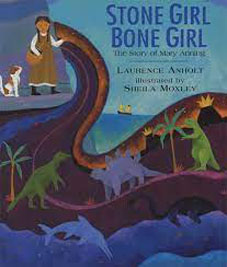
For our younger readers, Stone Girl Bone Girl by Laurence Anholt has proved a hit with the toddlers of Merlin staff. It tells the story of Mary Anning, with some beautiful illustrations that they enjoyed looking at in detail and talking about beyond the story itself.
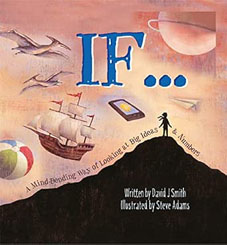
Younger readers have also enjoyed three slightly more factual books when reaching school age. Firstly, IF: A Mind-Bending Way of Looking at Big Ideas and Numbers by David J. Smith, which cleverly explains big numbers in understandable ways. For example, what if our galaxy was represented by a dinner plate or the history of the earth as a year? Spoiler alert in case you didn’t know, humans appear on December 31st!
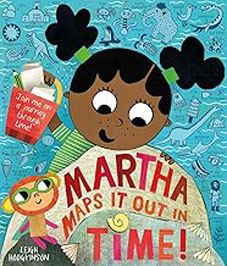
Martha Maps it Out in Time by Leigh Hodgkinson is another great children’s picture book, recently spotted by Merlin’s office manager Fiona when volunteering in her local library. The book takes Martha back to the beginning of time. Along the way she meets ancient sea creatures, dinosaurs and extinct animals like mammoths. This is a book with busy pages crammed with fun facts.

Finally, another firm favourite is Under Earth, Under Water by Aleksandra and Daniel Mizielinski. The book begins at the surface—whether land or sea—and takes you on a page‑by‑page descent toward the centre of the Earth. Along the way, you pass everything from burrowing animals and root vegetables to transport tunnels, aquifers, and eventually the Earth’s core. With lively illustrations and simple, engaging text, it’s a book that can be returned to again and again.
ADULT READERS
There are countless books aimed at adults that explore geoscientific themes, but here are a few of our favourites.
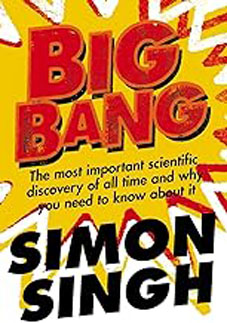
First is one that takes us all the way back to the very beginning: Big Bang by Simon Singh. Staff members have read several of Simon Singh’s works and have enjoyed them all. His clear, engaging writing style brings complex scientific ideas to life, making Big Bang both an entertaining and highly educational read.

The Planet in a Pebble by Jan Zalasiewicz tells the sweeping history of Earth through the unlikely lens of a single pebble. Our staff are, as you would expect, fascinated by the forces that shape our planet, so this perspective is both refreshing and deeply compelling.
We pick up pebbles on beaches all the time—turning them over in our hands, admiring their shape or colour—but rarely do we pause to consider the immense journey that brought them there. Zalasiewicz uses that simple, familiar object as a doorway into billions of years of geological processes, revealing how much complexity and wonder can be hidden in something so small and ordinary. It’s a beautifully crafted reminder that every stone has a story, and that Earth’s history is written all around us—if we only stop to look.
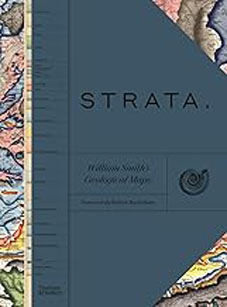
If you love maps, as every geoscientist invariably does, then look no further than STRATA: William Smith’s Geological Maps by Oxford University Museum of Natural History and Robert Macfarlane. STRATA is a beautifully designed book showcasing William Smith’s geological maps of England, Wales and parts of Scotland. It details the life and work of William Smith and his great contribution to geology. Even non-geologists will appreciate the beautiful maps and illustrations in this book. You can’t help but be in awe of the work it took to produce such a wonderful map for the first time.
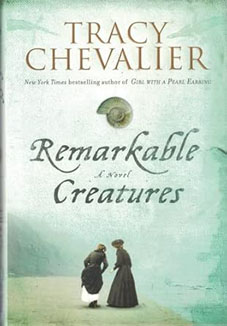
Tracey Chevallier is known for her historical novels based on true-life events, people and even paintings. Remarkable Creatures is her fictional tale loosely based on the life of Mary Anning, the impoverished Lyme Regis based fossil collector. The book alternates narration between Mary Anning and Elizabeth Philpot, an educated spinster who recently relocated to Lyme from London. Despite their very different backgrounds, the pair form a friendship based on their love of fossils. The story highlights the difficulties faced by women in the 1800s. Mary’s scientific discoveries went largely unacknowledged due to her working-class standing, while Elizabeth was able to help to promote Mary in her middle-class circles but was limited due to her gender. The book also highlights the impact that science had on religion at that time.
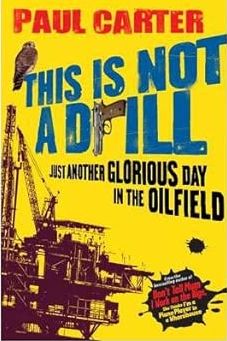
This is Not a Drill by Paul Carter is the second of his two books on the same gloriously chaotic theme—and anyone who’s read them will immediately understand why this is the one we’ve chosen to highlight!
Carter recounts his life in the industry beginning at the age of sixteen, and his stories span years spent working on rigs in some of the world’s most remote, extreme, and unpredictable places. The result is a collection of tales that veer from the utterly bizarre to the genuinely hair‑raising, all delivered with a humour that makes even the most alarming situations laugh‑out‑loud funny.
We are always looking for recommendations to add to the bookshelf, so please let us know your personal favourites.
KeyFacts Energy Industry Directory: Merlin Energy Resources