 KEYFACT Energy
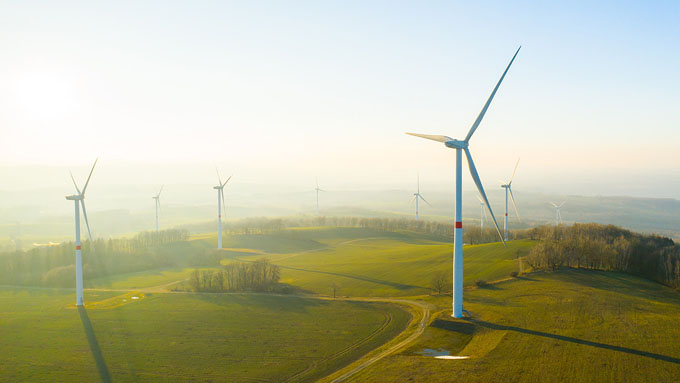
Britain’s aging wind fleet offers a significant opportunity for new market entrants to take a portfolio approach to repowering – the sites exist, the grid connections are in place and the planning history is established. The question is not whether UK repowering will happen, but who moves first, writes Andrew Ellis, Vice President at Gneiss Energy.
Over the next decade, a large share of early‑generation wind farms across the UK will reach the end of their original subsidy regimes and consent lifetimes.
By 2030, 3.2 GW of onshore wind capacity will face end‑of‑life decisions; whilst by 2035, this rises to over half of the fleet, implying roughly 7–8 GW of capacity at risk.
These farms, often built in the best locations, but with what is now the oldest technology – offer a significant opportunity to increase generation capacity through repowering, potentially alongside battery, solar and site extensions.
Across Europe, we can already see the emergence of a functioning repowering M&A market with dedicated platforms. However, the UK is not there yet – despite the fleet age and subsidy dynamics pointing in the same direction.
This suggests there is a significant opportunity in the UK for M&A in the repowering sector to aggregate risk and deliver attractive returns.
Germany
In the first half of 2025, 35 percent of all new onshore wind capacity in Germany came from repowering. The country’s onshore fleet stands at roughly 65 GW, with an average turbine age of 15.4 years, and 11.3 GW already operating outside feed‑in tariff support.
Repowering platform NeXtWind has made a significant play in this market, acquiring older wind farms (typically 2007–2011 vintage), and repowering them with fewer, larger turbines, co‑located solar and battery storage to maximise site value.
Backed by Sandbrook Capital, PSP Investments and IMCO, NeXtWind raised US$750 million of equity in 2023 and has since grown to 37 wind farms and 1.4 GW of repowered capacity, targeting 3GW by 2028. In November 2025, it closed a €1.8 billion syndicated debt facility, to roll out its repowering platform Europe-wide.
Growing trend
Disclosed repowering deal-flow remains thin, but transactions by Statkraft, Verbund, Opdenergy and ERG illustrate the trend. These include:

UK context
Similarly, in the UK, disclosed repowering M&A data is thin on the ground.
In January this year ERG completed the c.£97m purchase from OnPath Energy of seven operational onshore wind farms in northern England (all with ROCs) totalling 73MW, which ERG said offered, “…significant medium-term repowering opportunities, a technological intervention in which the group has strong expertise.”
In 2021 Orsted purchased a 389 MW operational / under construction portfolio across Scotland and Ireland from Brookfield Renewable Ireland for EV €571m. Orsted flagged repowering as part of the rationale for this mixed portfolio with Irish assets and development pipeline
What is notable on the UK side is the volume of strategic activity that isn't M&A yet: Nadara with 1.1 GW of UK onshore wind is repowering Beinn Ghlas and Novar 1; EGT has acquired Earthmill/WEP to access a £19m repowering services pipeline; whilst Scottish Power Renewables has completed the UK’s first major repower at Hagshaw Hill, lifting capacity from 16 MW to 80 MW (at the same time reducing turbine count from 26 to 14).
Regulatory landscape
The UK does present a complicated landscape. ROCs for early schemes begin expiring from March 2027, Feed-in Tariffs for sub-5MW schemes roll off from 2030, and a complex interplay of lease lengths, planning rules, community concerns and grid constraints adds to the complexity.
In January 2026, the government confirmed the switch of RO indexation from RPI to CPI from April 2026, reducing the value of remaining ROC cashflows for generators nearing the end of their subsidy terms. A consultation on moving the RO to a Fixed Price Certificate system is expected later this year, adding further uncertainty to the long-term economics of the legacy regime.
More significantly, in April 2026 the government announced a package of measures to "break the link" between gas and electricity prices through an increase in the Electricity Generator Levy from 45% to 55% from July 2026, extended beyond its planned 2028 end date, alongside plans for a new voluntary Wholesale CfD under which legacy generators would give up wholesale revenues for a fixed power price while continuing to receive ROC support. Those who accept would be exempt from the higher levy. The WCfD is planned to be introduced later this year, with an allocation process in 2027.
The message to owners of aging wind assets is not a subtle one. The returns from holding on merchant or ROC-linked revenue are being compressed from multiple directions while a viable revenue pathway for repowered assets is being established through the CfD.
Repowered onshore wind is now eligible for 20-year CPI-indexed CfDs from AR7 onwards, provided the original project commenced operation at least 25 years before the delivery year. Over 1.3 GW of onshore wind secured AR7 contracts at £51.85/MWh, with existing projects above 5MW able to apply on standard CfD terms, though smaller schemes cannot.
Planning treatment remains inconsistent, with repowering often assessed as new development despite decades of operational history. In Scotland, the Clean Power 2030 Action Plan has effectively allocated all available onshore wind capacity through to 2030, with around 113 sites (1.9 GW) potentially constrained to life-extension rather than full repowering under current rules.
These are second-order risks for a diversified portfolio rather than blockers at the platform level. Germany faced similar headwinds before regulatory reform and institutional capital aligned to overcome them.
The UK opportunity
The UK does not yet have a NeXtWind equivalent. There is no dedicated repowering platform operating at scale, despite the presence of hundreds of suitable assets.
More than 200 onshore wind farms across Great Britain, representing over 3.2 GW of capacity, will face end‑of‑life decisions by 2030, with more than half of today’s fleet doing so by 2035. These sites were largely built in the early‑to‑mid 2000s, typically with smaller turbines, lower hub heights and power curves that now look increasingly inefficient.
SSE Renewables, for example, operates around 2 GW of onshore wind, with around 30 per cent of these sites due to surpass their 20-year design life by the decade’s end.
Country-wide, there are around 770 MW of sub‑5 MW sites which are effectively excluded from the CfD mechanism and therefore more likely to be life‑extended, sold or decommissioned without a specialist repowering approach.
If even a conservative 1.5x–2.0x capacity uplift were achieved through repowering – in line with recent Scottish examples – this would imply 4–6 GW of incremental capacity delivered largely on existing sites.
At today’s onshore wind capital costs, that equates to a £6–10 billion redevelopment opportunity over the next decade. This estimate excludes co‑located storage, merchant optimisation or ancillary service revenues, which increasingly underpin project economics.
Conclusion
The building blocks for a UK repowering market are largely in place. An ageing fleet approaching subsidy expiry, technology that can deliver 1.5-2x capacity uplifts on existing sites, and a regulatory framework moving in the right direction, if not quite there yet.
What's missing is the capital and the platform. Germany shows what happens when institutional money backs dedicated vehicles to roll up fragmented portfolios and finance repowering at scale. NeXtWind went from launch to 1.4 GW in five years. The UK opportunity is comparable in size but earlier in the cycle.
For investors willing to take a portfolio approach, the sites exist, the grid connections are in place and the planning history is established. The question is not whether UK repowering will happen, but who moves first.
Gneiss Energy advises across the full spectrum of energy services and infrastructure M&A, including wind, repowering and adjacent services.
For further information please contact Andrew Ellis at andrew.ellis@gneissenergy.com.
This article first appeared in reNews.
KeyFacts Energy Industry Directory: Gneiss Energy