 KEYFACT Energy
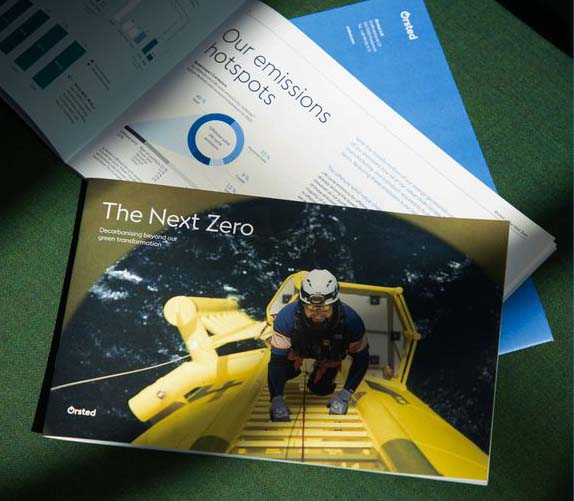
Ørsted is moving beyond its green transformation to focus on reducing emissions from how offshore wind farms are designed, built, and operated, with the ambition to reach net-zero emissions across its entire value chain by 2040.
Reducing emissions in the value chain is both a climate imperative and a business necessity. It reduces exposure to fossil fuel price volatility, strengthens strategic supplier partnerships and enhances market competitiveness as evolving regulations drive higher carbon costs.
In a new paper launched at London Climate Action Week, The Next Zero, Ørsted sets out how it will address the remaining emissions in its value chain, including those linked to materials, manufacturing, and logistics.
Patrick Harnett, Ørsted’s Chief Construction Officer, says:
“Our sights are firmly set on achieving net zero across our full value chain by 2040. The most impactful and immediate stepping stone is industrial electrification. But it will also require technical ingenuity in engineering, innovation in design and construction, and not least close collaboration across the supply chain.”
This next step builds on Ørsted’s sector-leading, science-based climate target, which was achieved by the end of 2025. Today, renewable energy accounts for 99 % of Ørsted’s energy production, with our own emissions having been reduced by more than 98 % compared with 2006.
Cutting emissions in steel, maritime fuels, and copper
Around 75 % of life cycle emissions from a typical offshore wind farm arise during development and construction, concentrated in a limited number of materials and activities.
Cutting these emissions is a complex task, but the work has already begun. Ørsted has engaged more than 50 strategic suppliers since 2020, focusing on areas such as steel, maritime fuels, and copper.
For the Hornsea cluster, Ørsted has contracted service operation vessels with dual-fuel methanol capability , and working with cable supplier NKT is expected to reduce emissions from export cables at Hornsea 3 by approximately 50 %.
Steel remains the largest source of life cycle emissions. Through its partnership with Dillinger, Ørsted is supporting the development of low-emission steel for monopile foundations, helping to enable investment in new production pathways.
At the same time, Ørsted is working to design emissions out from the outset. Leaner monopile designs that reduce embodied emissions per foundation has been developed in collaboration with the University of Oxford. Operational innovations are also contributing, including the use of heavy-lift cargo drones to reduce fuel consumption and reliance on vessels for offshore logistics.
Call for action
No company can achieve net zero alone. As highlighted in The Next Zero paper, progress will depend on coordinated action across suppliers, customers, policymakers, and investors, supported by credible demand signals and long-term investment frameworks.
To accelerate progress, Ørsted calls for:
- Carbon pricing – stable and credible frameworks that support investment in low-emission solutions
- Electrification – faster scaling of renewables-based electrification across industry
- Grids – accelerated grid build-out to support growing demand
- Innovation – stronger collaboration to develop and scale low-emission technologies.
KeyFacts Energy: Ørsted Denmark country profile