 KEYFACT Energy
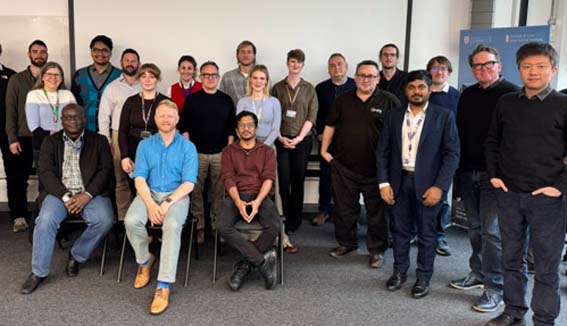
Academic, industry, and government representatives come together in the Interdisciplinary Centre for Sustainability Research to discuss a geothermal future for Liverpool.
Geothermal energy harnesses the natural heat stored underground to provide reliable, low-carbon heating and cooling. Unlike wind and solar power, which depend on weather conditions, geothermal systems can operate year-round, making them an attractive option for cities with consistent energy demands.
So, could one of the keys to achieving Net Zero in Liverpool be already beneath our feet? That was the question being investigated at a recent workshop hosted by Dr David McNamara, Department of Earth, Ocean and Ecological Sciences, which brought together researchers, industry experts, local government representatives, and sustainability leaders to explore the potential of geothermal energy across Liverpool City Region and the wider Northwest.
While geothermal energy is already widely used in countries such as Iceland, the Netherlands, and Germany, it remains relatively underdeveloped in the UK. That presents a significant opportunity for regions like Liverpool to take a leading role in its adoption.
Throughout the workshop, participants discussed why Liverpool is particularly well placed to benefit from geothermal development. The region combines a strong commitment to Net Zero ambitions with a growing demand for sustainable heating and cooling solutions. Beneath the surface, the area's geology and hydrology offer promising geothermal potential, while an active network of industry partners is keen to help bring projects forward.
The workshop also highlighted how the University is helping to shape the future of sustainable heating. Researchers are advancing technologies such as heat pumps that could improve the efficiency and accessibility of geothermal systems, while social scientists are helping ensure future developments are designed with communities at their heart. By combining expertise in engineering, energy technologies and public engagement, Liverpool researchers are helping to address some of the key challenges facing geothermal deployment.
A clear message from the workshop was that collaboration will be essential to turning geothermal potential into reality. Delivering geothermal energy at scale will require close partnerships between universities, industry, policymakers and local communities, with each bringing expertise needed to accelerate adoption of geothermal energy.
Building public awareness and confidence is also key. Because geothermal energy is largely invisible once installed, it is often less familiar to people than other renewable technologies. Participants stressed the importance of sharing real-world examples, engaging communities early, and ensuring that any future developments are affordable, accessible, and trusted by the public.
The University of Liverpool is well placed to help drive this agenda forward. By connecting expertise across disciplines and strengthening partnerships with industry, government and communities, the University is helping to create the conditions needed for geothermal energy to thrive. If successful, geothermal development could not only support the region's Net Zero ambitions but also position Liverpool as a national leader in low-carbon innovation, creating new opportunities for research, investment and sustainable growth.
The University of Liverpool would like to thank CeraPhi Energy, Causeway Energies, TownRock Energy, Eden Geothermal, WSP, Liverpool City Council, North West Net Zero Hub, Heatnet Global, Ener-Vate, IGNE, Harbour Project Management, Midland Net Zero Hub, Global City Futures, and University of Liverpool academics from Departments of Earth, Ocean and Ecological Sciences, Geography and Planning, Materials and Manufacturing, Architecture, Civil and Environmental Engineering, Philosophy, and Mechanical and Aerospace Engineering, and UoL’s Sustainability Team and Industry Engagement Team for their contributions to the workshop. We also thank the Interdisciplinary Centre for Sustainability Research for funding and assisting in the running of this workshop.
KeyFacts Energy: Geothermal news