 KEYFACT Energy
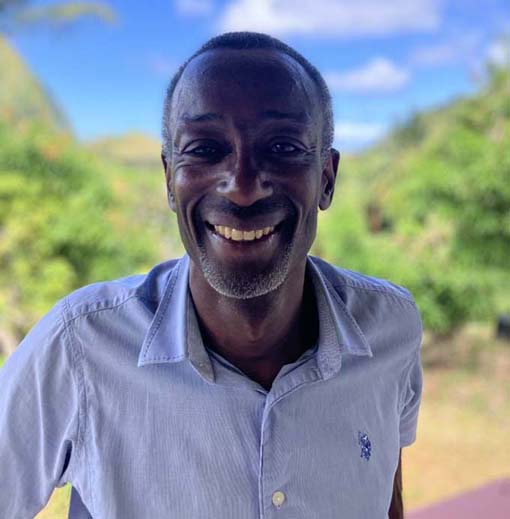
Ron Daniel is a geocientist with over 40 years of work experience in the energy sector and takes a keen interest in the move to renewables, especially geothermal. Life and career took him from his birthplace of St. Lucia in the Caribbean to the UK, followed by work assignments in Colombia, Trinidad and Tobago and Suriname. Ron set up his geological consultancy Lions Denergy Limited in 2017 and has recently re-incorporated it in St. Lucia, on his return home.
Ron is a co-founder of TIDE Community (Transition through Inclusion and Diversity for Equity), which seeks to fully fund underprivileged students to study net zero-related STEM subjects at university undergraduate level. Coming from a poor background himself, Ron fully appreciates the value of the bursaries from charities and the state-funded grant that allowed him to get where he is today, both educationally and professionally.
Ron holds a BSc in Geology from the University of Durham, and is a Fellow of the Geological Society, and a chartered geologist (CGeol). He has previously held board positions with the Geological Society of Trinidad and Tobago (GSTT) and the 100 Black Men of London (BMOL), as well as volunteering his time to TIDE and taking every opportunity to mentor and develop new recruits to the geoscience world.
Ron was awarded the 2026 Coke Medal by the Geological Society of London for services to geoscience.
Ron Daniel Q&A
Ron, what got you interested in geoscience?
My geoscience journey evolved. At school, as in sports, I was a Jack of All Trades and Master of None! I could have pursued languages but my chemistry teacher, an alumnus of Durham University, suggested that I read that subject there and I applied, gaining a deferred place at Van Mildert College. During my gap year, as well as knocking on doors selling encyclopaedias and buying waste paper, and working as a laboratory technician in a skin hospital, I found myself reading physical geography books at my local library in East London. As I delved deeper into the subsurface to wonder what underlay the geography, my interest in geology was awakened and I hedged my bets by re-applying to do joint honours chemistry/geology at Durham. By the end of the first year I had fallen in love with geology and switched to single honours.
Career opportunities were largely in the mining and petroleum sectors and I was fortunate to gain employment without a Masters or PhD. Having studied since I was three years old, I have been happy to satisfy my curiosity through on-the-job training and work experience instead of getting more degrees.
Has your career proceeded as you hoped?
Becoming a father a week after graduating was not in the plan but every cloud has a silver lining and my first daughter was able to experience the language and culture of South America as a young child and went on to study Spanish at university. I was fortunate to spend the early parts of my career at large companies where training and field trips were freely available. Working for smaller companies later brought greater exposure and responsibility, plus opportunities to coach and mentor less experienced staff. I was also able to focus on the hands-on geoscience which I love, rather than on management.
Industry consolidation led to many redundancies and the stress and uncertainty that they bring, but overall, I am very happy with the places that my career has taken me and where I have ended up.
What got you interested in mentoring and coaching?
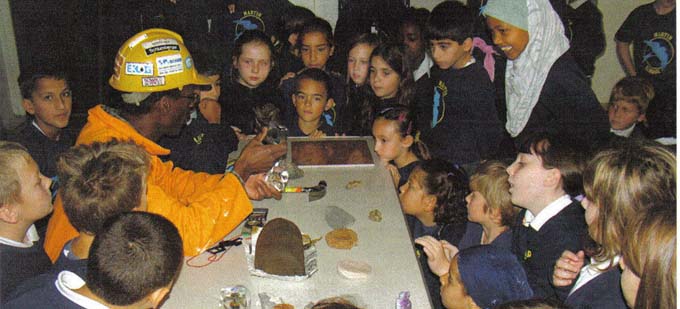
I was feeling disconnected from my Caribbean community and ironically, a white school friend introduced me to the 100 Black Men of London, a charity which runs mentoring programmes, such as filling the life skills gap that often exists between what is taught at school and what parents, often single mothers, can do. As well as running the North London programme and being a board director, I visited schools to talk about my geological career and to act as a positive role model.
My mother was a school teacher and I have always been keen to share my knowledge. As those many redundancies loomed, becoming a teacher was something I often considered. With my continued thirst for knowledge, I always treat coaching as a two-way thing, an opportunity for me to learn as well.
What challenges have you faced during your career?
As an 11-year-old arriving in London, I was teased about my Caribbean accent and quickly dropped it for something approaching Queen’s English, to fit in. And police stop and search (SUS) tactics in the 1980s taught me diplomacy in exposed situations. Those experiences fostered in me the need to develop resilience.
At times it has felt very lonely working in an industry and countries and companies in which you were very much in the minority and the benefits of diversity had not been recognised. Discrimination has been both blatant and unintended, such as my invited guests to a company meeting assuming that I was the technical assistant instead of their host, and a recruitment agent asking me at a screening interview whether all my children were with the same mother.
My experiences of poverty and discrimination, balanced by the social mobility that an education funded without debt (e.g. student loans) allowed, reinforces my commitment to a hard-earned career and the work of TIDE Community.
How did the TIDE Community initiative come about?
In the wake of the death of George Floyd and around the time of the first UK Covid lock-down, the then Petroleum Exploration Society of Great Britain had run an IDE membership survey and set up two special interest groups on Diversity and Inclusion, and Exploring the Energy Transition. An industry friend Sean McQuaid and I saw an opportunity to marry the two, and to promote a more diverse workforce to support the transition to Net Zero.
Sean and I both grew up under challenging circumstances, including in my case, family financial struggles. We recognised that grants and scholarships were instrumental in allowing us to get the education that led to our successful geoscience careers. I remember the stigma that came with the pink ticket for free school meals at school, as my single parent mother struggled to make ends meet. Now a registered charity staffed by volunteers, TIDE Community is seeking to raise scholarship funds for under-served/disadvantaged pupils to study STEM-related (Science, Technology, Engineering, Maths) subjects at undergraduate level, that will support the transition to Net Zero.
TIDE has consulted widely with educationalists and academia and built a network of support which includes the Geological Society of London, the GESGB, the Institute of Materials, Minerals and Mining, and the Chartered Institution of Wastes Management. We are also developing partnerships, such as funding and providing TIDE scholars for Keele University’s Physics with Renewable Energy BSc. The pilot project with Keele is a start and our longer-term vision is to raise up to £20MM of funding per year up to 2050.
How do you reconcile your petroleum past with TIDE’s Net Zero ambitions?
Awareness of climate change has increased tremendously over the past 40 years and many of the tools that my career has endowed me with can be applied to the renewables and carbon abatement space. For example, coming from a volcanic Caribbean island, I have long been aware of the geothermal potential of the region and hope to support progress there however I can, be it through geoscience, or project management. It is also worth noting that hydrocarbons support many sectors that don’t involving burning to create CO2; for example, the current closure of the Straits of Hormuz has hit the agricultural and plastics sectors hard too.
Tide Community - Transition through Inclusion and Diversity for Equity
TIDE Community emphasises a more diverse and inclusive workforce in the transition to Net Zero.
TIDE's aim is to prepare school children, for careers in Net Zero. Through raising money from industry, government and donors to fund their university education, TIDE Community will empower hundreds of disadvantaged students each year in Net Zero-related subjects.
Recent events force us at TIDE Community to think about what are the important challenges to be tackled by science and engineering and society, and what can we do about them? Two of the biggest are:
- Who will help the world to achieve Net Zero this century?
- How do we ensure Diversity and Inclusion and therefore equitable access to jobs for all, in particular, the BAME (Black, Asian, Multi-Ethnic) community?
There is an expected growth of 480,00 well paid green jobs in just eight years in the UK (1). We need to train thousands of scientists and engineers across a gamut of disciplines from aerodynamicists to waste and recycling engineers. This requires raising awareness in all primary and secondary school students and training these aspiring young people.
Society has a real and urgent problem with the present level of C02 emissions. We need Transition Professionals trained to deal with the trilemma of energy security and affordability whilst also achieving Net Zero. At the same time, pandemics such as COVID, austerity and world recessions have disproportionately affected the poorest in society.
Opportunities are shut down by age 16 for many children, as poverty, not a lack of application, broadens the gap between poorest and richest. More than 70% of children from the richest 10% of families achieve 5 good GCSEs, compared with less than 30% in the poorest households (2).
Furthermore, many minorities are over-represented in the lowest income percentiles and underrepresented in the professional job market. Attempts at improving Diversity and Inclusion will fail unless we deliver a significant pipeline of BAME and other minority professionals to the sector.
We advocate a simple yet ambitious solution that requires full support from many professional organisations, by providing scholarships to underprivileged secondary school children to train in science and engineering subjects relevant to achieving Net Zero.
We suggest a scheme where for each young person selected:
- The government/university/industry waive tuition fees
- Industry supplies a minimum maintenance grant of 10,000 pounds per annum over three years
- The young person completes a science or engineering degree relevant to achieving Net Zero and attends an annual summer school paid for by industry.
This initiative should aim to support 1,000 university students a year (3). Subject to professional educational advice, initial selection criteria are to be based on socio-economic and educational measures of disadvantage, attitude and aptitude. In line with the Equality Act 2010 (4), further selection will include diversity metrics as a proportionate means of supporting a fair representation of BAME and other minorities.
Climate Education Outreach
Alongside procuring scholarships for Net Zero / STEM-related undergraduate courses, it is important to reach out to school children of all ages to explain how such courses can help combat global warming.
TIDE Community is a proud contributor to the National Climate Education Action Plan (NCEAP). The Action Plan is part of the Department for Education's Sustainability and Climate Change Strategy.
(1) https://www.gov.uk/government/news/green-jobs-delivery-steps-up-a-gear
(2) https://ifs.org.uk/articles/uk-education-system-preserves-inequality-new-report (August 2022)
(3) Over three year groups, so circa 333 in each year group.
(4) Further details will be developed under guidance from legal and education professionals.

L-R: Sean McQuaid (Founder & Trustee), Ron Daniel (Founder & Trustee), Jenny Garnham (Trustee), Dom Skinner (Trustee), and Nikos Chrysantopoulos (Core Team Member)
KeyFacts Energy Industry Directory: TIDE