 KEYFACT Energy
How a persisting problem keeps finding new urgency
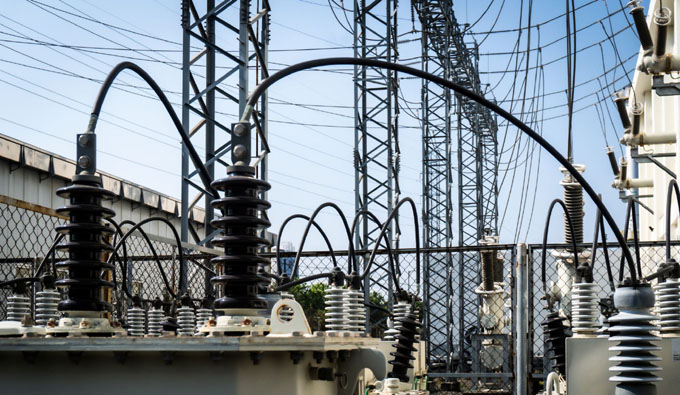
Energy security is back at the top of the political agenda. Governments are reassessing supply chains and policymakers are searching for ways to build greater resilience into national infrastructure. But the risks attracting attention now are not new. Here, Jimish Patel, founder of AirPlus Renewables, argues that the current moment is more a continuation of a pattern that has repeated throughout modern history, than a turning point.
Most accounts of the energy security debate start somewhere around 2022. Russian gas supplies tightened and wholesale prices rose across Europe. As governments looked for alternative sources, energy security moved higher up the political agenda. However, the challenges themselves were not unprecedented.
Nations have been managing the consequences of energy dependency for over a century. When Britain's Royal Navy converted from coal to oil before the First World War, it gained speed and operational range but handed strategic control to whoever supplied the fuel. The trade-off was understood at the time and was accepted anyway.
The 1973, the Arab oil embargo made the consequences of that logic unavoidable. Prices quadrupled and governments that had treated cheap, available energy as a given discovered how much of their economic stability rested on decisions made elsewhere. The policy responses were serious but short-lived. Once prices fell, the urgency dissipated and the underlying dependency rebuilt itself.
The same lesson, learned repeatedly
What followed over the next five decades was a cycle rather than a resolution. Each disruption produced a period of genuine attention to structural dependency. When conditions normalised, that attention faded.
As coal declined and renewables were still maturing, gas became the pragmatic choice for power generation across Europe. The economics made sense but the security logic was harder to defend, particularly as reliance on Russian supply deepened through the 2000s. UK Government data shows net import dependency still standing at 43.5 per cent in 2025, barely changed from the year before.
The practical consequences of that exposure became visible again in April 2025, when the Iberian Peninsula lost power for up to ten hours after around 15 gigawatts disappeared from Spain's grid within seconds. 60 million people were affected and the disruption moved rapidly through transport networks and essential services.
It was a reminder that grid vulnerability is not only a supply chain issue. It is a structural one, and centralised systems have limited capacity to absorb it. The UK’s position gives little cause for reassurance. Data shows that the UK imported a record 16 per cent of its electricity in 2025, a share that is likely to grow as ageing nuclear stations retire and North Sea gas output continues to fall.
Where the response must go
The scale of the problem has consistently attracted solutions of matching scale. New pipelines, offshore wind farms and liquefied natural gas terminals are all part of the answer. However, they do not address on their own the concentration of risk that comes from routing most of the country's energy through centralised infrastructure.
Generation at the point of use changes that calculation in a meaningful way. A building or industrial site producing part of its own electricity is less exposed to wholesale price movements and less vulnerable to grid disruption. The resource to make this practical already exists within the built environment.
Wind acceleration in urban areas produces concentrated airflow that standard renewable planning has largely overlooked. Technologies such as AirPlus Renewables' EDGEWIND™ Tech are designed specifically to capture it, allowing sites to generate electricity locally and reduce their reliance on the grid.
Renewables accounted for a record 44 per cent of UK electricity generation in 2025, which represents real progress at the national level. The Iberian blackout was a reminder that generation mix alone does not determine resilience. How energy is distributed and where resilience sits within the system matters too.
KeyFacts Energy Industry Directory: AirPlus Renewables